It Can Happen Without Warning
You are sitting at the gate, boarding pass in hand, when your phone buzzes. The email subject line says: “Important update about your upcoming flight.” You open it — and discover that the airline you booked with no longer exists.
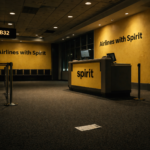
This scenario played out for thousands of passengers on May 2, 2026, when Spirit Airlines ceased all operations without warning in the middle of the night. It played out again for Magnicharters passengers in Mexico, for Joy Air travelers in China, and for customers of more than a dozen other carriers that have folded in 2026 alone.
The brutal truth about airline bankruptcies is that they almost never come with adequate warning for passengers. One day the airline is selling tickets. The next, it is gone.
So what do you do? This guide gives you a clear, step-by-step plan — whether you are currently stranded at an airport, holding a ticket for a future flight, or simply trying to protect yourself from this happening in the future.
For context on the current aviation crisis: Every Airline That Has Gone Bankrupt in 2026
Step 1: Stay Calm and Do NOT Go to the Airport Yet
The first instinct when you hear your airline has collapsed is to rush to the airport. Resist this.
When an airline shuts down suddenly — as Spirit did — airport desks are unmanned, customer service lines are disconnected, and the physical presence of the airline at the airport disappears almost immediately. Going to the airport will cost you time, money in parking or transport, and emotional energy, without getting you any closer to a solution.
Instead, stay home and work through the steps below online and by phone.
The one exception: if you are already at the airport or already on a trip abroad, go directly to a competing airline’s ticket counter. Airlines like United, American, and Delta have historically offered assistance to stranded passengers at the airport, even when they are not legally required to do so.
Step 2: Check Whether Your Flight Is Actually Canceled
When an airline files for Chapter 11 bankruptcy — the restructuring kind — it does not necessarily stop flying immediately. American Airlines, Delta, and United all filed for Chapter 11 at various points in their history and continued operating throughout.
The situation is different when an airline enters Chapter 7 or full liquidation — as Spirit ultimately did. In that case, all operations cease immediately.
Check the airline’s official website and social media channels for announcements. If you cannot find clear information, check flight tracking sites like FlightAware or Flightradar24 to see whether your specific flight is still showing as scheduled.
Key rule: Do NOT voluntarily cancel your booking while the situation is unclear. Canceling forfeits your rights to a refund through your credit card or travel insurance. Wait for the airline to cancel the flight officially — that action triggers your protections.
Step 3: File a Credit Card Chargeback (Your Most Powerful Tool)
If you paid for your ticket by credit card — and this is the single biggest piece of advice in this guide — you have a powerful legal right called a chargeback under the Fair Credit Billing Act (FCBA).
A chargeback allows you to dispute a charge with your credit card issuer on the grounds that services were not delivered. When an airline cancels your flight without providing an alternative or refund, that qualifies.
Here is how to do it:
Call the number on the back of your credit card and tell them you need to dispute a charge for services not rendered — your flight was canceled due to the airline ceasing operations. Have your booking confirmation, flight details, and any communications from the airline ready.
File online if available. Most major card issuers allow chargeback requests through their app or website, which can be faster than calling.
Act within the time limit. Most card issuers allow chargebacks for up to 120 days from the transaction date, though this varies. Do not wait.
Important: if the airline promised automatic refunds — as Spirit did — give it three to five business days. If the refund does not appear, file the chargeback anyway. Promises made by a bankrupt airline do not carry the same weight as a statutory right.
Step 4: If You Paid by Debit Card
Debit card protections are significantly weaker than credit card protections, but they are not zero.
Most major banks in the US and UK offer a dispute process for debit card transactions similar to a chargeback, though the legal protections are less robust. Contact your bank immediately and explain that a purchase was not fulfilled.
In the UK, passengers who paid by debit card for purchases over £100 may also have protection under Section 75 of the Consumer Credit Act — check with your bank.
This situation is a strong argument for always paying for flights by credit card rather than debit card. The protection difference is significant.
Step 5: Check Your Travel Insurance
If you have travel insurance, check your policy immediately — but read it carefully. Not all travel insurance policies cover airline insolvency or bankruptcy, and this distinction matters.
Standard travel insurance typically covers things like medical emergencies, trip cancellations due to illness, and lost luggage. Airline insolvency may or may not be included.
What you need is a policy that specifically covers “scheduled airline failure” or “supplier insolvency.” If your current policy does not include this, your insurer will likely decline the claim.
If your policy does cover airline failure, contact your insurer as soon as possible and document everything — keep all emails from the airline, your booking confirmations, and receipts for any additional costs you incurred (alternative flights, hotels if you were stranded, etc.).
Step 6: Look for Rescue Fares From Competing Airlines
When a major airline collapses, competing carriers often — though not always — step in with discounted “rescue fares” to help stranded passengers reach their destinations.
When Spirit collapsed in May 2026, United Airlines and American Airlines both offered rescue fares for a limited window. These sold out quickly as tens of thousands of displaced passengers competed for seats.
To find rescue fares after an airline collapse:
Check the websites of major competing airlines directly and look for any statement about the collapsed carrier. Follow aviation news sites for announcements. If you are at the airport, ask competing airline staff directly — gate agents sometimes have more information than the website.
Act quickly. Rescue fares are typically available for only 48 to 72 hours after a collapse announcement, and they are capacity-limited.
Step 7: What Happens to Your Frequent Flyer Miles?
This is the question that causes the most grief — and unfortunately, the answer is usually not good.
When an airline enters liquidation rather than restructuring, loyalty program points become liabilities of the bankrupt estate. In most cases, there are no assets specifically designated to honor those points. When Spirit shut down, Free Spirit frequent flyer points became worthless immediately.
There are two possible but not guaranteed outcomes:
Another airline might acquire the loyalty program database as part of the bankruptcy asset sale and offer to convert points to their own currency — usually at an unfavorable rate. This has happened in some past bankruptcies but is not guaranteed and did not happen with Spirit.
The bankruptcy court might, in rare cases, prioritize loyalty point holders in the claims process — but given that they are typically treated as unsecured creditors, recovery is usually pennies on the dollar at best.
The lesson: if you have a significant balance of miles or points with any airline showing signs of financial stress, use them as soon as possible. They are not guaranteed to have value tomorrow.
Step 8: File a Claim With the Bankruptcy Court (Last Resort)
If your credit card chargeback is denied and your travel insurance does not cover the loss, you can file a claim as an unsecured creditor in the airline’s bankruptcy proceedings.
This is a slow, uncertain process. Bankruptcy cases can take years to resolve, and unsecured creditors — the category most passengers fall into — are among the last to be paid. In many airline liquidations, unsecured creditors receive little or nothing.
That said, it is worth filing a claim if the amount involved is significant. The bankruptcy court will publish instructions for how to submit claims — check the airline’s official bankruptcy filing or the relevant bankruptcy court’s website.
How to Protect Yourself Before It Happens
The best time to prepare for an airline bankruptcy is before you ever book the ticket. Here is what smart travelers do differently:
Always pay by credit card, never debit. The chargeback protection alone is worth it.
Buy travel insurance that specifically covers airline insolvency. Read the policy, not just the summary page.
Book directly with the airline when possible. Third-party booking sites add a layer of complexity to refund claims and can slow down chargebacks.
Watch for warning signs. Frequent flight cancellations, sudden route cuts, missed payroll news reports, and regulatory warnings are all red flags that an airline may be in trouble.
Do not hoard miles with a struggling carrier. Use them or transfer them before they disappear.
Diversify your travel. If you rely entirely on one budget carrier for a route, consider what your alternative would be if that carrier disappeared tomorrow.
The Bottom Line
Airline bankruptcies in 2026 are not rare events. They are happening at a pace the industry has not seen in decades, driven by fuel costs, debt, and business models that were built for a different world.
The best protection is preparation. Know your rights, use your credit card, buy the right insurance, and watch for the warning signs. If the worst does happen, work through the steps in this guide — and remember that a credit card chargeback is almost always your fastest and most reliable route to a refund.
See which airlines have already collapsed: Every Airline That Has Gone Bankrupt in 2026
Understand the bigger picture: Why Are So Many Low-Cost Airlines Collapsing in 2026?