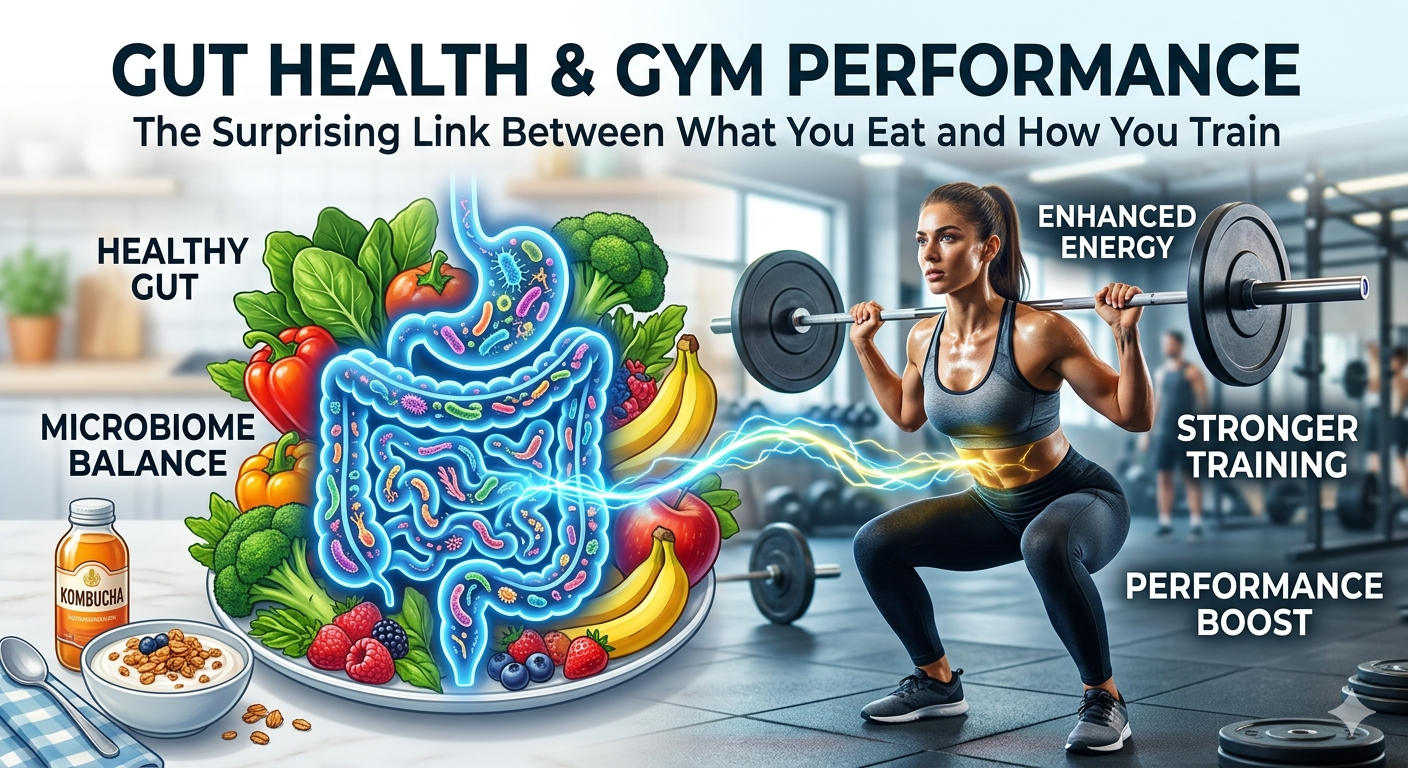
You’ve tracked your macros. You’ve optimized your pre-workout meal. You’ve bought the best protein powder money can buy. But if you’re still feeling sluggish at the gym, recovering slowly, or struggling to hit personal bests — the answer might not be in your supplement stack. It might be in your gut.
In 2026, the connection between gut health and athletic performance has moved firmly from fringe wellness territory into mainstream science. Researchers, dietitians, and elite sports coaches are increasingly pointing to the microbiome — the trillions of bacteria living in your digestive system — as one of the most underrated tools in the fitness playbook. And it turns out, what you eat to feed those bacteria matters as much as the protein shake you’re downing post-workout.
What Is the Gut Microbiome and Why Does It Matter for Fitness?
Your gut is home to trillions of microorganisms — bacteria, yeasts, and other microbes — that collectively form your gut microbiome. Far from being passive passengers, these microscopic communities are deeply involved in keeping your body functioning at its best.
A healthy, diverse microbiome influences everything from immune function and hormone regulation to mood, energy levels, and nutrient absorption. For anyone who exercises regularly, that last one is particularly critical: if your gut microbiome isn’t functioning well, you may not be absorbing the protein, vitamins, and minerals from your food as efficiently as you think.
Research from 2024 to 2026 is reinforcing something scientists have suspected for years — the gut microbiome plays a direct role in physical performance, inflammation, and recovery. The gut-brain axis (the communication highway between your digestive system and your brain) also influences motivation, focus, and even pain tolerance during training.
In short: a healthy gut makes you a better athlete.
The Fermented Food Surge: From Trend to Mainstream
One of the most significant food shifts of 2026 is the mainstream arrival of fermented foods — and it’s directly connected to growing awareness of gut health.
Fermented foods like kimchi, sauerkraut, kefir, kombucha, live yogurt, and miso have been dietary staples in cultures around the world for centuries. In 2026, they’ve crossed over from specialty health food stores to the center of mainstream grocery aisles. As one food industry report put it: “Fermented foods have been having a moment for years, but 2026 is seeing them go truly mainstream.”
Why? Because the science behind fermentation has become impossible to ignore. Fermentation naturally produces organic acids and beneficial microorganisms that help support a diverse gut microbiome. In 2026, fermentation is being reframed — less about preservation and more about intentional transformation of food to enhance its functional value for the human body.
Kimchi has moved well beyond its role as a Korean side dish. In 2026, fermented vegetables are being used as flavor components, condiments, and meal inclusions across food categories — from prepared meals to functional snack bars.
Kefir — a tangy, drinkable yogurt packed with diverse probiotic strains — is gaining traction among athletes for its ability to support gut diversity while delivering 10 to 15 grams of high-quality protein per serving. It’s naturally lower in lactose than regular milk, which makes it accessible even for those with mild lactose sensitivity.
Kombucha and fermented plant-based beverages enriched with microbiome-supporting fibers are among the fastest-growing categories in the functional beverage space. The postbiotics category — bioactive compounds produced by probiotics during fermentation, such as short-chain fatty acids and peptides — is gaining significant traction for its ability to deliver gut and immune benefits.
Probiotics, Prebiotics, and Postbiotics: What Athletes Need to Know
The gut health conversation used to center on probiotics — live bacteria found in fermented foods and supplements. In 2026, the picture is more nuanced and more exciting.
Probiotics are the live cultures found in yogurt, kimchi, kefir, and sauerkraut. They’re the backup troops for the beneficial bacteria already present in your gut. Research indicates that regularly eating fermented foods contributes meaningfully to a healthy gut microbiome.
Prebiotics are specific types of fiber that act as food for your beneficial gut bacteria. They’re found in garlic, onions, leeks, asparagus, green bananas, oats, and legumes. Without adequate prebiotic intake, even the best probiotic sources can’t do their job effectively.
Postbiotics are the emerging category: bioactive compounds — like short-chain fatty acids — produced as a by-product of your gut bacteria fermenting fiber. These compounds have been linked to reduced inflammation, stronger immune function, and improved metabolic health. For athletes, reduced gut inflammation means better nutrient absorption and faster recovery.
The industry in 2026 is moving toward “synbiotic” products that combine all three categories into comprehensive gut health solutions — integrated formulations designed to create a genuinely healthy gut ecosystem rather than just adding a single probiotic strain.
The Gut-Performance Connection: What the Research Actually Shows
So how does gut health actually translate to better performance in the gym? Here’s what the current science supports:
1. Better Nutrient Absorption A diverse, healthy microbiome improves the efficiency with which your body extracts protein, amino acids, vitamins, and minerals from food. If your gut is inflamed or imbalanced, you may be eating the right foods but absorbing far less of their value than you should. For athletes relying on precise nutrition to fuel performance and recovery, this matters enormously.
2. Reduced Exercise-Induced Inflammation Intense training creates inflammation in muscles and connective tissue — that’s a normal and necessary part of the adaptation process. But chronic, poorly managed inflammation slows recovery and increases injury risk. Probiotic and prebiotic-rich foods have been incorporated into recovery diets specifically to support gut microbiota and reduce systemic inflammation.
3. The Gut-Brain Axis and Motivation Anyone who has felt mentally foggy, anxious, or unmotivated in the days following poor eating has experienced the gut-brain axis at work. Research on fermented dairy products, in particular, suggests possible benefits for mood regulation through this communication pathway — though findings remain preliminary. For athletes, stable mood and mental focus are not soft metrics. They directly influence training consistency.
4. Energy Availability Your gut microbiome produces short-chain fatty acids through the fermentation of dietary fiber. These compounds serve as a fuel source for the cells lining your colon and also influence the liver’s regulation of blood glucose — meaning a healthy microbiome can contribute to more stable energy levels throughout your training sessions.
Read more: Anti-Inflammatory Foods That Speed Up Muscle Recovery →
What to Eat: Practical Gut Health Nutrition for Athletes
Building a gut-friendly diet for performance doesn’t require radical changes. It requires consistent, intentional addition of microbiome-supporting foods to your existing nutrition plan.
Add one fermented food daily. This could be kefir in your morning smoothie, a spoonful of kimchi alongside lunch, a glass of kombucha in the afternoon, or live-culture yogurt as your evening snack. The goal is diversity — different fermented foods introduce different bacterial strains.
Prioritize fiber from whole plant foods. Oats, legumes, garlic, onions, leafy greens, and whole grains are among the best prebiotic sources. Aim for 25 to 38 grams of total fiber daily — most active people fall well short of this target.
Don’t overlook protein timing alongside gut health. Protein and fiber work powerfully together. A high-protein, high-fiber meal provides satiety, supports muscle repair, and feeds your microbiome simultaneously. Think: a bowl of Greek yogurt with oats and berries — protein, probiotics, prebiotics, and antioxidants in a single serving.
Reduce ultra-processed foods. This isn’t about perfection — it’s about frequency. Heavily processed foods, artificial sweeteners, and excessive refined sugar have been consistently linked to reduced gut microbiome diversity. Reducing them creates more room for the microbiome-supporting foods that actually serve your performance.
The 2026 Food Industry Responds
Food brands have clearly seen the data. The gut health sector is no longer niche — it’s a cornerstone of the global food and beverage industry. The next wave of functional innovation is microbiome-centric, moving beyond simple fortification toward holistic gut health ecosystems integrated into everyday food products.
Fermented plant-based beverages enriched with microbiome-supporting fibers, high-fiber protein bars that combine prebiotic and probiotic benefits, and even gut-health-focused ready-to-eat meals are expanding rapidly on grocery shelves in 2026. The industry trend that began with a yogurt aisle overhaul has now spread to the snack aisle, the drinks section, and the meal prep category.
For the everyday athlete — the person who trains four or five times a week and wants to eat in a way that genuinely supports those efforts — this is genuinely good news. The foods that build a healthy microbiome are no longer hard to find or expensive to buy. They’re in your regular grocery store, right next to your protein chips.
Also read: From Protein Chips to Protein Ice Cream: How Performance Food Took Over the Grocery Aisle →
Key Takeaways
- Your gut microbiome directly influences nutrient absorption, inflammation, mood, and energy — all critical to athletic performance.
- Fermented foods like kimchi, kefir, kombucha, and live yogurt have gone mainstream in 2026, driven by consumer demand for gut health solutions.
- Probiotics (live cultures), prebiotics (fiber), and postbiotics (fermentation by-products) work together to support a diverse, healthy microbiome.
- Athletes who eat gut-friendly diets may experience faster recovery, better energy stability, and improved mental focus.
- The food industry is rapidly innovating gut-health-centered products — they’re no longer confined to the health food aisle.