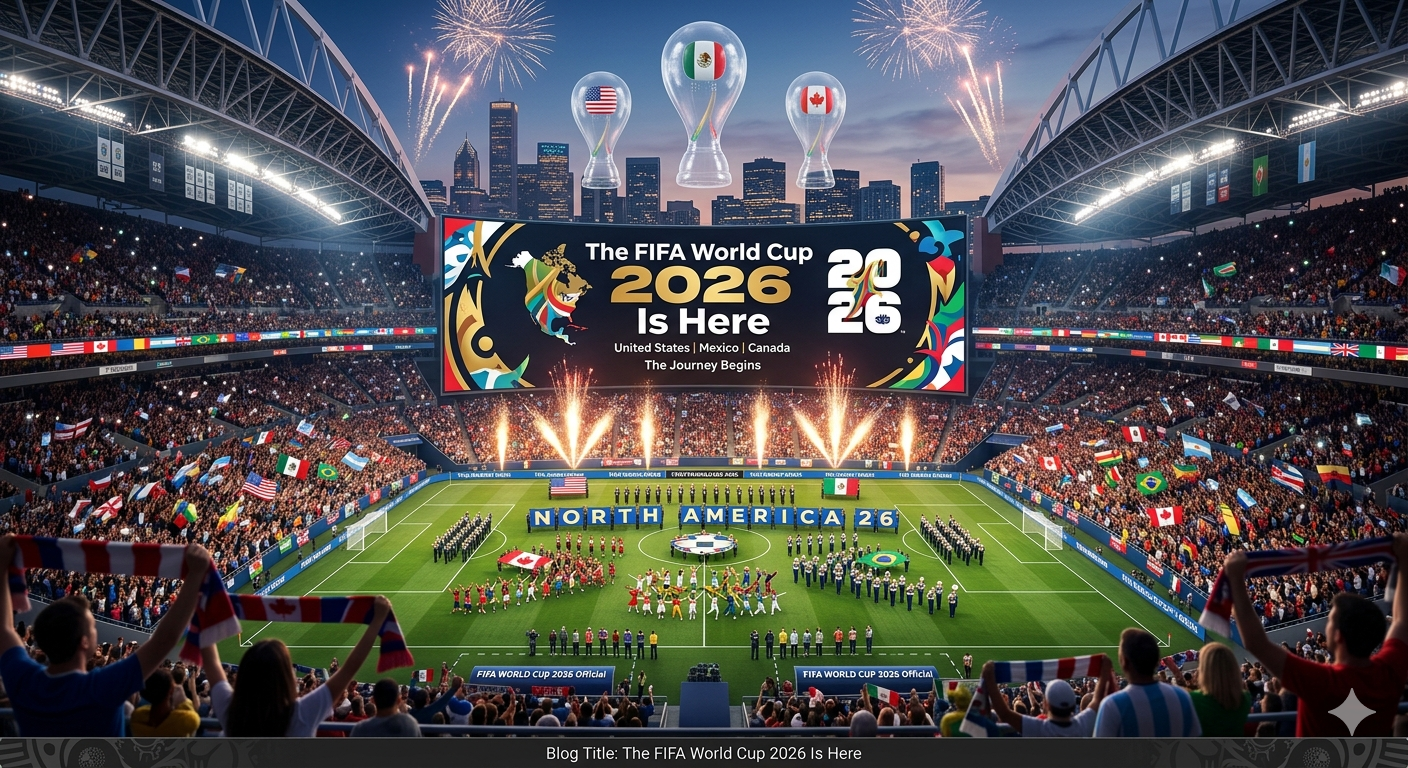
Eight days. That’s all that stands between today and one of the most extraordinary travel events in American history.
On June 12, 2026, the FIFA World Cup officially kicks off at SoFi Stadium in Los Angeles when the United States Men’s National Team takes the field against Paraguay. And with that opening whistle, millions of travelers from around the world — and across the country — will converge on 11 American cities for the largest, most-watched sporting event ever staged on North American soil.
If you have tickets, are thinking about going, live in one of the host cities, or simply want to understand what’s coming over the next six weeks, this is your guide. We’ve pulled together everything you need to know about traveling to and around the 2026 FIFA World Cup in the United States — the cities, the stadiums, the costs, the tips, the traps, and what makes this tournament unlike anything that has come before.
The Scale of This Thing: Why 2026 Is Different
Let’s start with the numbers, because they tell a story that words alone can’t quite capture.
This is the first FIFA World Cup ever staged with 48 national teams — up from 32 in previous tournaments. That expanded format means 104 total matches across three host countries: the United States, Canada, and Mexico. The United States carries the heaviest load of any host nation, with 78 of those 104 matches taking place across 11 American cities, in stadiums averaging nearly 70,000 seats in capacity.
The tournament runs from June 11 to July 19, 2026 — nearly six weeks of continuous competition. The grand final will be held at MetLife Stadium in East Rutherford, New Jersey, on July 19, within sight of the Manhattan skyline. A global television audience of more than 5 billion viewers is expected to watch — making it the most-watched single sporting event in recorded human history.
For the United States travel and tourism industry, the scale of the opportunity is almost without precedent. The World Cup is projected to inject $17.2 billion into the American economy, create 185,000 jobs, and draw 1.24 million dedicated international visitors who are expected to spend more than $5,000 per person on average — roughly 1.7 times more than a typical international visitor to the US spends.
In plain terms: this is the biggest sporting and tourism event the United States has ever hosted. And it starts next week.
The 11 US Host Cities: What Every Traveler Needs to Know
The 2026 World Cup is not a single-venue event. It’s a continental festival spread across eleven American cities, each offering a completely different experience for traveling fans. Here’s what you need to know about each one.
Los Angeles, California
Stadium: SoFi Stadium (70,000 capacity) Matches: Opening USMNT match (June 12), quarterfinal, and multiple group stage games
Los Angeles is where it all begins, and the entertainment capital of the world is ready to put on a show. SoFi Stadium — one of the most technologically advanced venues in the world — sits in Inglewood, roughly 20 miles from downtown LA. The city’s blend of entertainment, beaches, and world-class dining makes it one of the most appealing destinations on the entire World Cup circuit. Hotel rates in Los Angeles are projected to increase up to 90% around match days — so if you’re going, book immediately and consider staying further from the stadium and using public transit.
New York / New Jersey
Stadium: MetLife Stadium (82,500 capacity) Matches: Multiple group stage games and the FINAL on July 19
The World Cup final is happening in the shadow of New York City, and the energy surrounding that match will be unlike anything the metropolitan area has ever experienced. MetLife Stadium is accessible by NJ Transit from Penn Station. Accommodation in Manhattan and surrounding areas will be at a historic premium for final weekend — expect to pay multiples of normal hotel rates if you haven’t already booked.
Dallas / Fort Worth, Texas
Stadium: AT&T Stadium (94,000 capacity) Matches: 9 matches — the most of any US city — including a semifinal on July 14
Dallas is the undisputed star of the American World Cup experience from a pure numbers perspective. With 9 matches — the most of any venue in the United States — and AT&T Stadium’s enormous 94,000-capacity arena in Arlington, Dallas will be hosting some of the tournament’s biggest games. A highly anticipated group stage match between England and Croatia is scheduled for June 17. Visit Dallas is projecting 3.8 million visitors and an economic impact of $1.5 billion to $2.1 billion during the tournament. Airbnb estimates its guests alone will generate $502 million in GDP in the Dallas area. Of all US cities, Dallas also offers the most reasonable prices for food, accommodation, and transportation — making it the top-rated US host city for value by independent travel analysts.
Miami, Florida
Stadium: Hard Rock Stadium (65,000 capacity) Matches: Group stage and knockout round games
Miami brings the tropical energy, the nightlife, and the Latin passion for soccer that makes it one of the most culturally authentic World Cup venues in the country. Hard Rock Stadium sits in Miami Gardens. South Beach hotels are fully sold out for major match weekends, but accommodation options exist throughout Broward County for fans willing to commute.
Atlanta, Georgia
Stadium: Mercedes-Benz Stadium (71,000 capacity) Matches: 8 matches including a semifinal
Atlanta is hosting a semifinal alongside its group stage matches — a major moment for a city that has been investing heavily in soccer infrastructure. The Arthur M. Blank US Soccer National Training Center was established in Atlanta partly as a legacy project connected to the World Cup. Mercedes-Benz Stadium is one of the best venues in American sports, with competitive food pricing (intentionally kept low by the stadium’s ownership) and excellent public transit access from MARTA.
Houston, Texas
Stadium: NRG Stadium (72,000 capacity) Matches: Group stage and knockout matches
Houston brings together one of the most diverse populations in the United States with a deep soccer culture rooted in its enormous Latino community. Visitors are expected to spend $200 to $400 per day in local businesses, contributing $100 to $200 million to the local economy. Houston’s food scene — exceptional Tex-Mex, Vietnamese, and international cuisine — makes it a genuinely appealing destination beyond the matches themselves.
Philadelphia, Pennsylvania
Stadium: Lincoln Financial Field (70,000 capacity) Matches: Group stage games
Philadelphia offers access to American history alongside World Cup football — the Liberty Bell, Independence Hall, and one of the most passionate sports fan bases in the country are all within reach. Note: FIFA made headlines recently by cancelling thousands of hotel reservations in Philadelphia without explanation ahead of the tournament. While authorities have described it as standard practice, it has created uncertainty for some travelers — double-check your accommodation bookings if you have them.
Seattle, Washington
Stadium: Lumen Field (68,000 capacity) Matches: Group stage games
Seattle’s mild summer weather, stunning Pacific Northwest scenery, and thriving food culture make it one of the sleeper destinations on the World Cup circuit. Lumen Field — already beloved by Sounders FC’s passionate fanbase — offers one of the best atmospheres of any American soccer venue. Pike Place Market, Kerry Park, and the surrounding natural beauty make extended stays genuinely worthwhile.
Boston / New England
Stadium: Gillette Stadium (65,000 capacity) Matches: Group stage games
Boston offers World Cup visitors the charm of one of America’s most historic and walkable cities. Gillette Stadium is located in Foxborough, about 30 miles from downtown Boston — plan for significant transportation demand on match days.
San Francisco / Bay Area, California
Stadium: Levi’s Stadium (70,000 capacity) Matches: Group stage games
Levi’s Stadium sits in Santa Clara at the heart of Silicon Valley. The Bay Area offers world-class dining, one of the most beautiful urban environments in the country, and proximity to wine country and coastal California. Hotel prices across the Peninsula and South Bay will spike around match days.
Kansas City, Missouri/Kansas
Stadium: Arrowhead Stadium (76,000 capacity) Matches: Group stage games — including Argentina’s opening matches
This may be the most emotionally charged story of the entire American World Cup. Lionel Messi — arguably the greatest soccer player who has ever lived — and the defending champion Argentine national team touched down in Kansas City for their opening matches. Fans from Argentina, Brazil, Germany, France, Mexico, Spain, Italy, England, Morocco, and Saudi Arabia have been flooding Kansas City in what tourism observers described as an unprecedented convergence. Airlines including American, Delta, and United have expanded flight capacity into Kansas City. Hotels across the metro area report near-full occupancy for Messi’s match nights.
The Reality Check: Challenges Travelers Are Facing
It would be dishonest to write a World Cup travel guide without acknowledging that the 2026 tournament has not been without complications. Several factors have created genuine friction for international travelers.
International visitor numbers are tracking below original forecasts. A reality check on the tourism projections: 80% of US hotels reported bookings falling short of projections as of April 2026. The United States endured a 5.5% drop in foreign visits in 2025 compared to 2024, and international visitor spending fell 4.6% to $176 billion. Stricter US visa policies, elevated security concerns, and the sheer cost of long-haul travel combined with expensive match tickets have deterred some international fans.
Hotel costs are extreme around match days. Oxford Economics projects hotel room revenues related to the World Cup will increase anywhere from 7% to 25% in June 2026, with the largest increases expected around match days. Some cities are seeing far higher spikes — Los Angeles hotels near the stadium are up to 90% more expensive than normal during game windows.
Visa complexities remain a barrier. While the US government waived visa bond requirements for confirmed World Cup ticket holders — a move the US Travel Association welcomed as “a smart, targeted move” — the broader visa and immigration environment has made some international fans hesitant to commit to US travel. Check your ESTA or visa status well in advance if traveling from overseas.
Security funding disputes. Earlier this spring, World Cup matches in Massachusetts faced potential cancellation due to a lack of US federal funding for security operations. The parties ultimately reached a deal, but the episode highlighted the complex logistics of hosting a global mega-event across 11 cities simultaneously.
Travel Tips: How to Get the Most Out of the 2026 World Cup
Whether you’re attending matches or simply traveling through a host city during tournament season, these tips will help you navigate the experience.
Book accommodation outside the immediate stadium area. The biggest price spikes are closest to venues. Fans staying 20 to 30 minutes away by public transit or rideshare can save hundreds of dollars per night without meaningfully increasing travel time.
Use public transit wherever possible. Every host city has expanded public transportation options for the tournament. Traffic and parking around stadiums will be intense on match days — trains, light rail, and buses are almost always faster and cheaper than driving.
Plan your food experiences deliberately. World Cup host cities are some of the most culinarily diverse in the United States. Dallas’s food scene, Houston’s multicultural restaurants, Miami’s Latin dining, Seattle’s Pacific Rim cuisine — the food is genuinely part of the World Cup travel experience if you plan for it.
For domestic travelers, consider the mid-size cities. Kansas City, Atlanta, and Seattle offer world-class match experiences with lower accommodation costs and less congestion than Los Angeles or New York. These cities are genuinely underrated World Cup destinations.
Check the schedule before booking. The 104-match schedule is available on FIFA’s official website. Understanding which matches are in which cities on which dates allows you to optimize a trip that might include multiple host cities. Several fan travel groups have built cross-country itineraries around the group stage schedule.
Why This Matters Beyond the Matches
The FIFA World Cup 2026 is more than a sports event. For the United States, it’s a moment of global visibility that arrives at a complex time for American tourism.
US tourism has been under pressure from visa policy changes, geopolitical tensions, and perception challenges in key international markets — the World Travel & Tourism Council warned the US tourism industry could lose an estimated $12.5 billion in international visitor spending for 2026. Against that backdrop, the World Cup represents a counter-narrative opportunity: a chance for international visitors to experience American cities, American hospitality, and American culture firsthand.
And by most accounts, those who make the trip are leaving with positive impressions. A new survey of recent international visitors to the US found that 91% were satisfied with their trip, 83% felt welcome, and 61% left with a more favorable opinion toward America than they arrived with.
The 2026 FIFA World Cup is, for 38 days, the center of the world’s attention. Eleven American cities are ready to welcome it. And for travelers — domestic and international — the next six weeks offer something genuinely rare: the chance to be part of history.
Key Takeaways
- The FIFA World Cup 2026 runs June 11 to July 19, across 11 US host cities, Canada, and Mexico — with 78 of 104 matches on American soil.
- The tournament is projected to draw 1.24 million international visitors to the US and inject $17.2 billion into the American economy.
- Dallas hosts the most US matches (9), offers the best value, and has a semifinal on July 14.
- Los Angeles hosts the USMNT opening match June 12. New York/New Jersey hosts the Final on July 19.
- Kansas City is the epicenter of the tournament’s hottest storyline — Lionel Messi and Argentina’s title defense.
- Hotel prices are up 7% to 90% around match days depending on city — book now if you haven’t.
- Domestic travelers: Atlanta, Seattle, and Kansas City offer excellent experiences at lower cost than coastal mega-cities.
- International visitors: Confirm your ESTA or visa status immediately — do not leave this for the last minute.